SPJ JAPAN
Backend consulting is what makes cross border operartions work.
SPJ Japan exists to provide it.
At SPJ Japan, backend consulting and coordination form the core of its work. The organisation supports structured cross-border operations by enabling process discipline, institutional alignment, and consistency across regions and operating cycles.
Backend consulting is what makes cross border operartions work.
SPJ Japan exists to provide it.
At SPJ Japan, backend consulting and coordination form the core of its work. The organisation supports structured cross-border operations by enabling process discipline, institutional alignment, and consistency across regions and operating cycles.
VISION .
MISSION.
OUR APPROACH &
PROCESS
PHILOSOPHY
At SPJ Japan, backend consulting and coordination form the core of its work. The organisation supports structured cross-border operations by enabling process discipline, institutional alignment, and consistency across regions and operating cycles.
Backend-first engagement
Operations are designed and supported at the systems level. Front-facing activity is enabled through backend coordination rather than direct execution.
Institutional handling
Frameworks are built for programs, cohorts, and partner organisations. Individual case handling is avoided in favour of repeatable, scalable structures.
process before
scale
Growth is approached through documented workflows, defined checkpoints, and verification standards, ensuring consistency before expansion.
OUR APPROACH &
PROCESS
PHILOSOPHY
At SPJ Japan, backend consulting and coordination form the core of its work. The organisation supports structured cross-border operations by enabling process discipline, institutional alignment, and consistency across regions and operating cycles.
Backend-first engagement
Operations are designed and supported at the systems level. Front-facing activity is enabled through backend coordination rather than direct execution.
Institutional handling
Frameworks are built for programs, cohorts, and partner organisations. Individual case handling is avoided in favour of repeatable, scalable structures.
process before
scale
Growth is approached through documented workflows, defined checkpoints, and verification standards, ensuring consistency before expansion.
OUR APPROACH &
PROCESS PHILOSOPHY
At SPJ Japan, backend consulting and coordination form the core of its work. The organisation supports structured cross-border operations by enabling process discipline, institutional alignment, and consistency across regions and operating cycles.
Backend-first engagement
Operations are designed and supported at the systems level. Front-facing activity is enabled through backend coordination rather than direct execution.
Institutional handling
Frameworks are built for programs, cohorts, and partner organisations. Individual case handling is avoided in favour of repeatable, scalable structures.
process before scale
Growth is approached through documented workflows, defined checkpoints, and verification standards, ensuring consistency before expansion.
OUR
ORIGIN
STORY
SPJ Japan took shape in response to gaps that existed between aspiration and structure in cross-border engagement. Its origins lie in early work focused on international education, at a time when access to credible, institutionally aligned pathways was limited in parts of South Asia.
OUR ORIGIN
STORY
SPJ Japan took shape in response to gaps that existed between aspiration and structure in cross-border engagement. Its origins lie in early work focused on international education, at a time when access to credible, institutionally aligned pathways was limited in parts of South Asia.
SPJ Japan took shape in response to gaps that existed between aspiration and structure in cross-border engagement. Its origins lie in early work focused on international education, at a time when access to credible, institutionally aligned pathways was limited in parts of South Asia.
Initial efforts addressed the movement of students toward overseas programs that lacked consistent academic recognition. Rather than operating through intermediaries, SPJ Japan worked directly with universities, regulatory bodies, and public authorities to design structured academic frameworks. These early initiatives established a pattern that would later define the organisation’s approach: long timelines, institutional engagement, and persistence through regulatory complexity.
The establishment of SPJ Japan in Nagasaki in 2012 marked a significant shift. Living and working in regional Japan revealed challenges that were structural rather than temporary. Younger populations were leaving smaller cities, while demand for trained caregivers and skilled professionals continued to rise. SPJ Japan began engaging with local governments, care institutions, and state authorities to design training pathways that combined language preparation, professional certification, and long-term placement planning. These programs resulted in sustained workforce participation across multiple regions of Japan.
As operations expanded, attention turned to another systemic barrier: the difficulty faced by foreign engineers entering the Japanese workforce. Language requirements, preparation costs, and relocation risks often discouraged serious candidates.
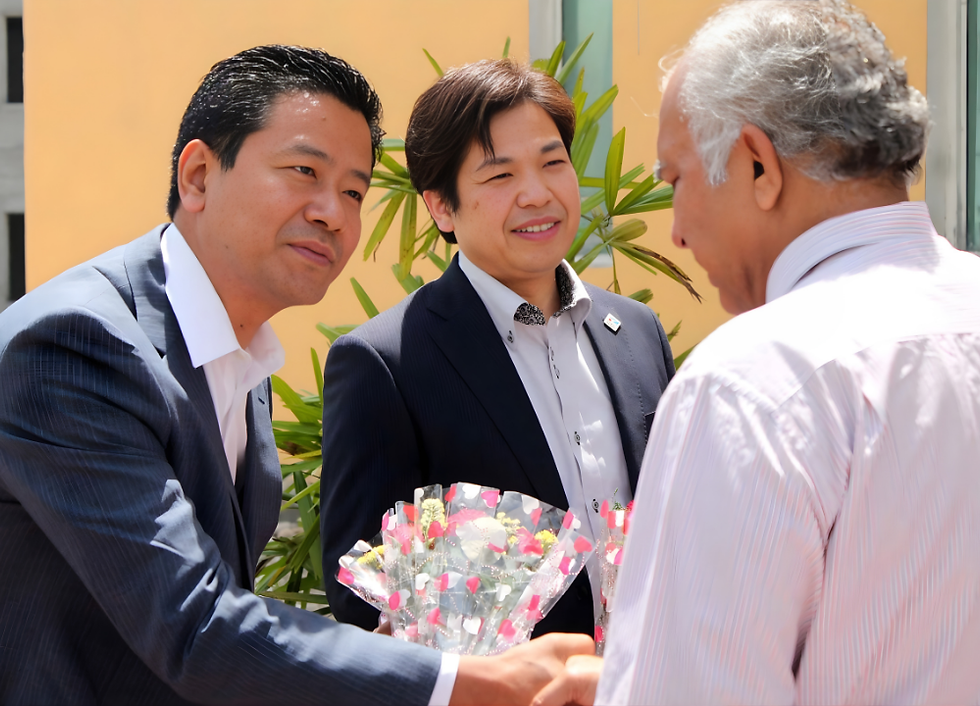
SPJ Japan responded by decentralising preparation, enabling language proficiency and readiness to be achieved outside Japan before formal entry. This shift reduced friction, improved outcomes, and reinforced the importance of backend preparation over surface-level access.
SPJ Japan’s work later extended into supporting foreign small and medium-sized enterprises seeking entry into Japan’s regional markets. Rather than focusing on established metropolitan centres, engagements were developed in smaller cities and island regions where long-term alignment with local governments and institutions was possible. These initiatives emphasised technology adoption, operational integration, and gradual trust-building within local industrial ecosystems.
Across every phase of its development, SPJ Japan was shaped by a consistent principle: cross-border operations succeed only when trust is built over time and supported by structure. Cultural differences, regulatory environments, and institutional expectations demanded patience, clarity, and sustained coordination. Quick execution without preparation was never sufficient.
Today, SPJ Japan stands as a backend consulting and coordination organisation shaped by years of on-ground experience. Its work remains closely connected to regional Japan and cross-border environments where careful planning, institutional alignment, and continuity determine whether outcomes endure.
SUBHA NARSINGH BHATTACHAN
GROUP CHAIRMAN, SPJ JAPAN
SPJ Japan operates under the leadership of Subha Narsingh Bhattachan, whose long-term vision and emphasis on structure have shaped the organisation’s direction. His approach prioritises backend systems, institutional alignment, and continuity over short-term execution.
Under his guidance, SPJ Japan has grown through careful planning, regional engagement, and sustained partnerships, allowing the organisation to operate quietly and effectively across complex cross-border environments.


LEADERSHIP
SUBHA NARSINGH BHATTACHAN
GROUP CHAIRMAN, SPJ JAPAN
SPJ Japan responded by decentralising preparation, enabling language proficiency and readiness to be achieved outside Japan before formal entry. This shift reduced friction, improved outcomes, and reinforced the importance of backend preparation over surface-level access.
SPJ Japan’s work later extended into supporting foreign small and medium-sized enterprises seeking entry into Japan’s regional markets. Rather than focusing on established metropolitan centres, engagements were developed in smaller cities and island regions where long-term alignment with local governments and institutions was possible. These initiatives emphasised technology adoption, operational integration, and gradual trust-building within local industrial ecosystems.
Across every phase of its development, SPJ Japan was shaped by a consistent principle: cross-border operations succeed only when trust is built over time and supported by structure. Cultural differences, regulatory environments, and institutional expectations demanded patience, clarity, and sustained coordination. Quick execution without preparation was never sufficient.
Today, SPJ Japan stands as a backend consulting and coordination organisation shaped by years of on-ground experience. Its work remains closely connected to regional Japan and cross-border environments where careful planning, institutional alignment, and continuity determine whether outcomes endure.
